
Institute for Social Research and University of Michigan College of Engineering select three projects for 2025 Rural Life Program grants
July 21, 2025
ANN ARBOR — Now in its third year, the joint Rural Life Program maintained by the University of Michigan’s Institute for Social Research and College of Engineering has selected three new projects aimed at an in-depth look at key issues of rural life.
“The Rural Life Program is a highlight of ISR’s commitment to interdisciplinary partnerships, and we’re pleased to continue our relationship with the College of Engineering,” said ISR Director Kate Cagney. “This research will offer important insights into the issues facing rural communities, as well as explore creative, sustainable, data-driven solutions to those issues.”
This year’s projects tackle novel approaches to tracking infectious disease and improving both access to and the reliability of electricity in rural communities. Brief outlines of the three projects selected for this year’s grants are presented below.
Wastewater Surveillance of Common Respiratory Pathogens: Leveraging Micropolitan and Site-specific Data for Improved Estimates of Disease Burden in Rural Communities
By John Kubale (ISR), Krista Wigginton (CoE), Grace Noppert (ISR), Marisa Eisenberg (School of Public Health)
Most testing for infectious disease throughout history has hinged on individual patients seeking out testing. This approach can lead to delays in identifying infectious individuals, which can lead to a great number of infections, and can also miss out on testing asymptomatic but still infected patients.
Testing wastewater for infectious diseases, however, can yield remarkable data on the amount of disease circulation in a given population, an approach that was proven remarkably effective during the COVID-19 pandemic. This project will use cellular location data to provide better information about the sociodemographic and geographic characteristics of communities contributing to wastewater testing programs in Michigan, exploring how these data can be used to improve surveillance of respiratory illnesses in rural communities.
Enhancing Energy Resilience in Rural Contexts with Wirelessly-Powered Microgrids
By Aline Eid (CoE), Noah Webster (ISR), Johanna Mathieu (CoE)
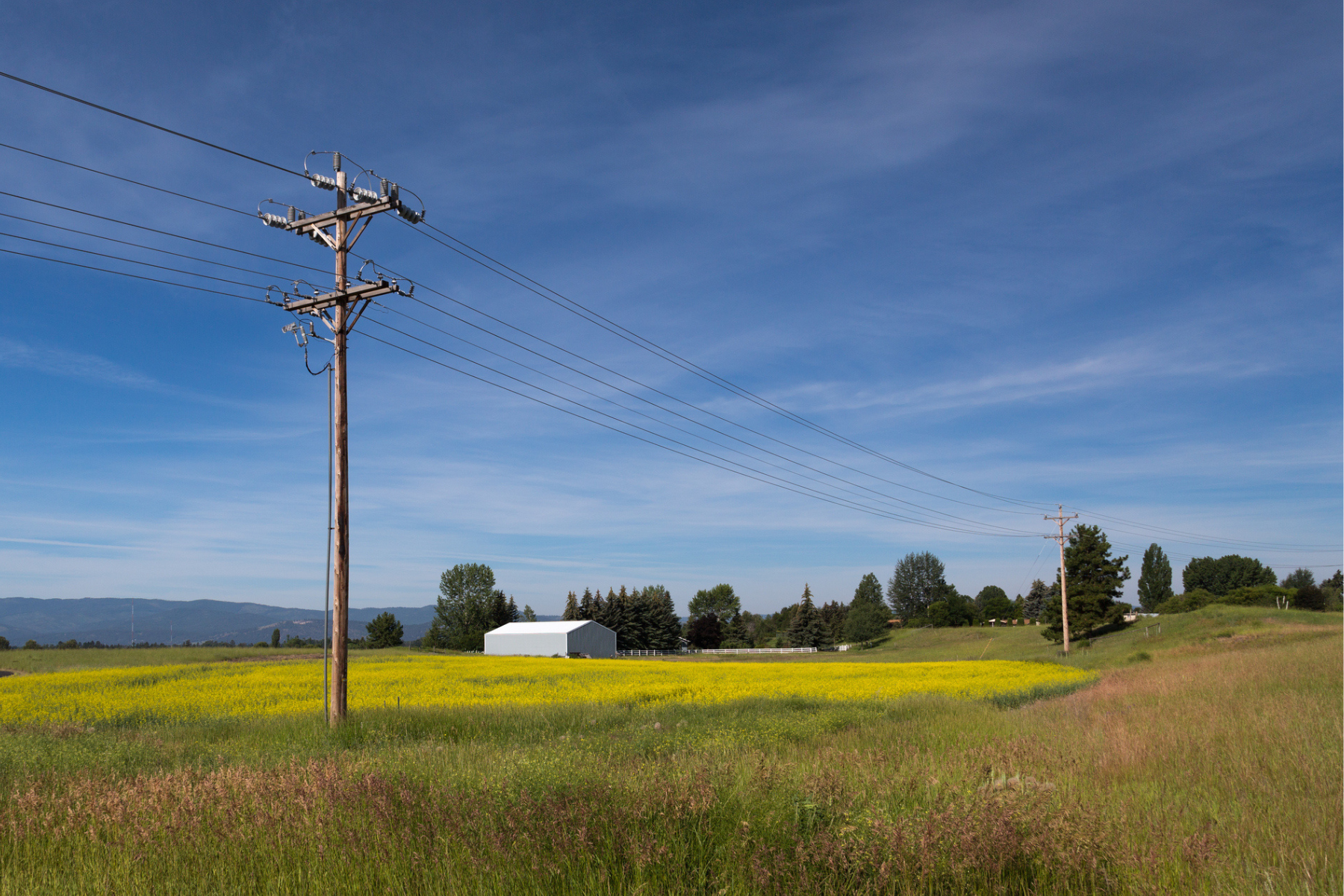
Electricity in rural communities can be unreliable. Rural electrical infrastructure can be expensive, and the distance from load centers can make getting consistent power a fraught proposition in the best of circumstances, leading to more frequent outages that in turn hinder all manner of essential service.
In this project, researchers will investigate fixed and dynamic wireless power solutions, analyzing their viability against current solutions. Researchers will explore key use cases such as powering community resilience hubs, remote temporary communities, disaster relief and emergency response operations, remote military bases, and scientific research stations, with the main focus being on remote communities and post-disaster operations in rural areas.
Rethinking Rural Power Grid Planning Considering Health Impacts
By Johanna Mathieu (CoE), Carina Gronlund (ISR)
Health systems have an obvious but easily misunderstood connection to the electrical grid. Media coverage on massive power outages often correctly identify the major effects of a loss of power on health, such as estimated deaths, but more subtle impacts can go unnoticed. Things like a lack of heat, air conditioning, or ventilation can also have a significant negative effect on health issues, especially in rural issues, where the power grid is often much more susceptible too problems.
In this project, researchers will analyze data from Michigan Medicare to identify associations between outages, extreme weather and deaths or emergency room visits, potentially resulting in a more “health-aware” electrical grid planning approach.
Contact: Jon Meerdink ([email protected])